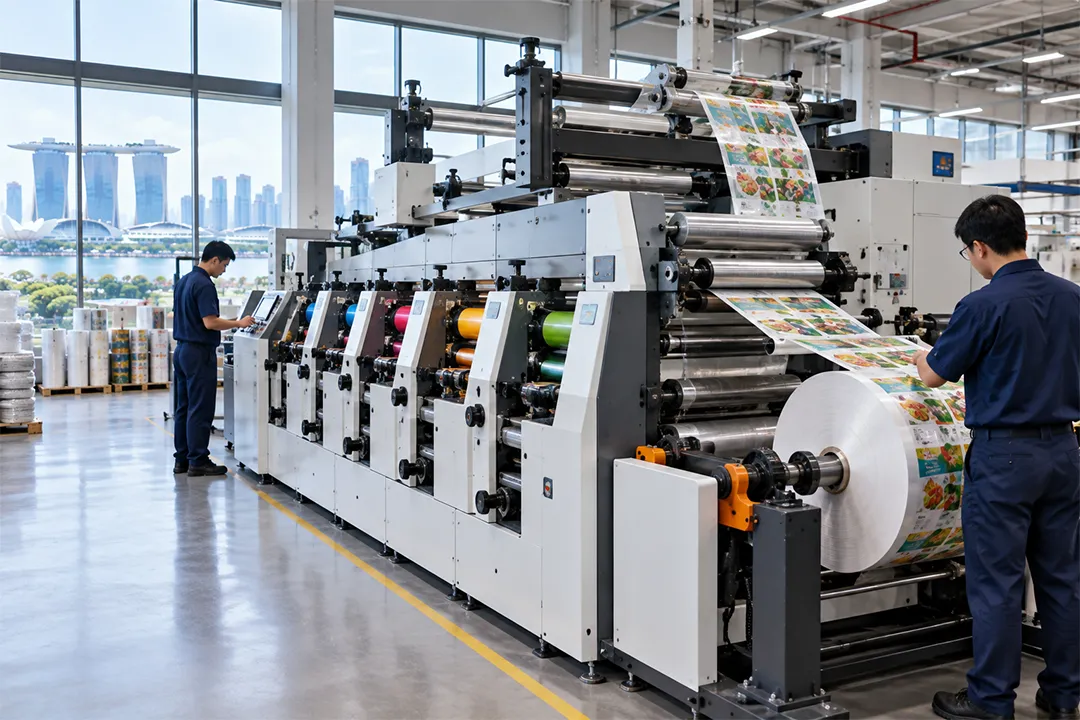
Businesses involved in packaging and label production often need printing equipment that delivers consistent quality, efficient production and reliable performance. Choosing the right Flexographic Printing Machines For Sale can help manufacturers handle demanding production requirements while controlling operating costs and maintaining print quality.
Singapore’s competitive manufacturing sector has created demand for dependable printing machinery for flexible packaging, labels, paper products and other applications. Understanding machine types, specifications and purchasing considerations makes it easier to select equipment that matches production goals.
What Are Flexographic Printing Machines?
Flexographic printing machines use flexible relief printing plates to transfer ink onto different substrates. These machines can print on materials such as plastic films, paper, foil, corrugated materials and nonwoven substrates, making them particularly useful for packaging and label production.
A flexographic press typically uses an anilox roller, printing cylinder or sleeve, ink system, impression cylinder and substrate-handling components. Depending on the machine configuration, additional units may support processes such as laminating, coating, drying and slitting.
Why Choose Flexographic Printing Equipment?
Flexographic technology can provide several advantages for businesses handling medium- and high-volume printing. One major benefit is its ability to process a broad range of substrates while maintaining efficient production speeds.
Modern equipment can also support multiple colours and inline finishing processes. As a result, manufacturers can complete more production stages within a single workflow instead of moving materials between separate machines.
Furthermore, flexographic printing can be suitable for packaging manufacturers that need repeatable output. Properly configured equipment can help reduce production interruptions and improve material utilisation, particularly when operators understand the machine’s capabilities.
How Do You Choose the Right Flexographic Printing Machine In Singapore?
Selecting suitable equipment requires more than comparing prices. Businesses should first identify their expected production volume, substrate types, print width, colour requirements and desired production speed.
The machine configuration should match the products being manufactured. For example, a company producing flexible packaging may have different requirements from a manufacturer specialising in labels or paper bags.
It is also important to evaluate automation features, drying systems, registration controls and changeover procedures. These factors can significantly influence productivity during regular production.
What Should You Check Before Buying?
Before purchasing, inspect the machine’s technical condition, production history and maintenance requirements. This is particularly important when considering used equipment because previous operating conditions can affect its remaining service life.
Buyers should examine printing units, rollers, cylinders, gears, bearings, electrical components and control systems. Where possible, request maintenance records and arrange a machine inspection before completing the purchase.
Additionally, check whether replacement parts and technical support are readily available. A competitively priced machine may become expensive if essential components are difficult to source or qualified technicians are unavailable.
Finding a Flexographic Printing Machine Supplier in Singapore
Working with an experienced Flexographic Printing Machine Supplier Singapore can simplify the purchasing process. A knowledgeable supplier should be able to explain machine specifications, recommend suitable configurations and provide information about installation and operation.
Supplier support can become particularly valuable when a business is purchasing specialised equipment for the first time. Technical guidance can help determine whether a particular press is appropriate for the intended substrates and production volumes.
Moreover, buyers should consider after-sales service rather than focusing solely on the initial purchase price. Installation assistance, operator training, spare parts and maintenance support can contribute to long-term equipment reliability.
Is Refurbished Equipment Worth Considering?
A Refurbished Flexo Printing Machine Singapore option can be attractive for companies seeking capable equipment while managing their capital expenditure. Refurbished machinery may undergo inspection, servicing, component replacement or testing before being offered for sale.
However, refurbishment standards can vary significantly between suppliers. Therefore, buyers should ask exactly what work has been completed and which components have been replaced or repaired.
A detailed inspection report can provide useful information about the machine’s condition. Buyers should also confirm whether the refurbished equipment includes any warranty or technical support after installation.
Understanding Industrial Flexographic Printing Machine Options
An Industrial Flexographic Printing Machine is generally designed for demanding production environments where reliability, throughput and consistent output are important. Such systems may incorporate advanced automation, wider printing widths, multiple printing stations and integrated production controls.
The right industrial machine depends on the manufacturer’s production requirements. A larger press is not automatically the best choice because excessive capacity can increase investment and operating costs without providing meaningful benefits.
Instead, businesses should calculate expected production volumes and compare them with machine capacity. This approach can help manufacturers choose equipment that provides sufficient performance without unnecessary expenditure.
What About a Second-Hand Flexographic Printing Machine Singapore?
A Second-Hand Flexographic Printing Machine can provide an alternative for businesses that want to enter flexographic production with a lower initial investment. Used machinery may offer proven technology and established production capabilities.
Nevertheless, purchasing second-hand equipment requires careful evaluation. Age alone does not determine machine quality. Maintenance history, operating hours, previous applications and component condition can be more significant factors.
It is also worth comparing the total ownership cost. Repairs, transportation, installation, spare parts and upgrades can affect the actual investment, so these expenses should be considered alongside the purchase price.
Which Features Matter Most for Packaging Production?
Packaging manufacturers should pay close attention to print width, number of colours, substrate compatibility, drying capacity and production speed. Registration accuracy is also important because packaging designs often contain multiple colours and detailed graphics.
Automation can further improve productivity by reducing manual adjustments and supporting consistent production. However, advanced features can increase the purchase price, so companies should identify which functions provide genuine operational value.
The machine should ultimately support the specific packaging products being produced rather than simply offering the highest specification available.
How Can Businesses Reduce Long Term Printing Costs?
Purchase price is only one part of the overall cost of operating printing machinery. Energy consumption, ink usage, plate costs, maintenance, spare parts and downtime can all influence long-term expenses.
Preventive maintenance can help identify mechanical or electrical issues before they cause major production interruptions. Operators should also receive appropriate training so that equipment is used according to manufacturer recommendations.
Furthermore, businesses should monitor production efficiency regularly. Identifying unnecessary waste, extended setup times and frequent machine stoppages can reveal opportunities for improving operational performance.
What Makes a Supplier Reliable?
A reliable supplier should provide clear technical information and avoid making recommendations based solely on price. The supplier should understand the intended application and explain how the proposed equipment matches production requirements.
Transparency is particularly important when buying refurbished or second-hand machinery. Buyers should receive accurate information about machine age, condition, previous use, maintenance and available documentation.
Strong after-sales support is another important consideration. Access to spare parts, servicing and technical assistance can make a significant difference throughout the machine’s working life.
Making a Confident Purchasing Decision
Businesses searching for Flexographic Printing Machines For Sale should approach the decision as a long-term equipment investment rather than a simple machinery purchase. The right press should meet current production requirements while providing sufficient flexibility for future business growth.
Comparing new, refurbished and second-hand options can help companies identify the most suitable investment level. At the same time, technical specifications, supplier reputation, maintenance requirements and after-sales support should all be evaluated.
For Singapore manufacturers, selecting equipment from a dependable Flexographic Printing Machine Supplier Singapore can also simplify installation, servicing and ongoing technical support. Careful research before purchasing can ultimately contribute to more reliable production and better operational efficiency.
Conclusion
Choosing suitable flexographic printing equipment requires careful consideration of production requirements, machine condition, technical specifications, operating costs and supplier support. By evaluating these factors together, businesses can make a practical investment that supports consistent printing performance, efficient production and long-term manufacturing objectives.
Frequently Asked Questions
What materials can flexographic printing machines print on?
They can commonly print on plastic films, paper, foil, corrugated materials, labels and various flexible packaging substrates.
Are refurbished flexographic machines reliable?
They can be reliable when properly inspected, serviced, tested and supported with appropriate replacement components and technical assistance.
What should I consider when buying used machinery?
Consider machine condition, maintenance history, operating hours, replacement parts, technical support, installation costs and expected future maintenance.
Is flexographic printing suitable for packaging production?
Yes, the technology is widely suited to packaging because it supports various substrates, colours, production speeds and finishing requirements.
How can I choose a suitable supplier in Singapore?
Compare technical expertise, equipment condition, after-sales support, spare-parts availability, installation assistance and experience with your intended application.